“If there were not HBCUs,’ they would have to be invented.”
There are 110 historically black colleges in the United States today, including public and private, two-year and four-year institutions, medical schools and community colleges.
The Higher Education Act of 1965 defines an HBCU as "… any historically black college or university that was established prior to 1964, whose principal mission was, and is, the education of black Americans."
Supporting Historically Black Colleges Vital to Our Future – and Our Nation’s Security
Date: Wednesday, April 25, 2007
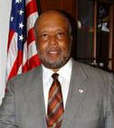
By: Rep. Bennie G. Thompson, Special to BlackAmericaWeb.com
I am a graduate of two historically black colleges and universities: Tougaloo College and Jackson State University, respectively. The training I received at these two great institutions groomed me for the position I hold today -- chairman of the Committee on Homeland Security in the United States House of Representatives. I also have the great pleasure of serving the people of the second Congressional District in Mississippi.
My experience at both HBCUs was invaluable -- so much so that I strongly advocate on behalf of these tremendous institutions to keep them viable and fierce competitors in the world of higher education. As a former educator, I recognize the role of higher education in releasing our communities from the grip of poverty. HBCUs play an invaluable role in preparing the nation’s diverse workforce and ensuring that our students are well equipped to compete in a growing, global economy.
Although HBCUs represent only 3 percent of all colleges and universities, they enroll 16 percent of all African-Americans in four-year degree granting institutions. As the world becomes more flat, it is essential that HBCUs participate in preparing the next generation of leaders to keep our nation secure. HBCUs are an important contributor to areas of study related to homeland security.
The following statistics, provided by the National Association for Equal Opportunity in Higher Education further demonstrate the significant role of our nation’s HBCUs:
• HBCUs graduate 30 percent of African-Americans receiving four-year degrees overall and 40 percent of African-Americans receiving four-year degrees in Science, Technology, Engineering and Mathematics (STEM) areas.
• HBCUs are 18 of the top 23 producers of African-Americans who go on to receive doctoral degrees in STEM areas.
• HBCUs represent four of the top 10 producers of successful African-American medical school applicants. These HBCUs produce 20 percent more African-American applicants than the other six institutions combined.
• HBCUs represent eight of the top 10 producers of African-American engineers.
Recognizing the significant contributions of HBCUs, I am dedicated to ensuring the participation of these institutions by including them in the various initiatives and programs for colleges and universities offered by the Department of Homeland Security. Currently, the Department has a Centers of Excellence program on five college campuses across the nation. The Centers are designed to provide best practices and innovative solutions to protect against a variety of terrorist attacks and threats to our nation.
None of the current centers are hosted on HBCU campuses. While all of the existing centers have at least one collaborative partnership with an HBCU, none of the primary centers are on HBCU campuses. What is even more disheartening is the fact that HBCUs only make up seven of the 91 partner institutions. This disparity, among others, is precisely the type of issue I am addressing as chairman of the Committee on Homeland Security.
I firmly believe that our institutions have the expertise, capabilities and the know-how to not only sustain a quality partnership with lead institutions that serve as centers, but also and even more importantly, at least one HBCU should serve as a primary center. I am working with the department to ensure that our institutions have this opportunity. HBCUs are often the producers of the best and the brightest -- Thurgood Marshall, Ed Bradley, Ron McNair and Oprah Winfrey are all graduates of these magnificent institutions. The rich culture, diversity of thought and nurturing environment at HBCUs are just a few reasons why Centers of Excellence belong on these campuses.
The department recently announced the addition of four new Centers of Excellence. As alumni, students, faculty, administrators and friends, we all have a role in encouraging these great institutions to apply for opportunities.
I leave you with the words of Mary McLeod Bethune, founder of what is now Bethune Cookman College, an HBCU in Daytona Beach, Florida: "We live in a world which respects power above all things. Power, intelligently directed, can lead to more freedom."
HBCUs must be in the forefront of protecting our Nation and ensuring our freedom for this generation and generations to come.
----------------------------------------------------------------------------------------------------------
Rep. Bennie G. Thompson is now serving his seventh term as the Democratic Congressman from Mississippi’s Second District and second term on the Homeland Security Committee.
 Posted By: Jehan Bunch
Monday, March 3rd 2008 at 2:36PM
You can also
click
here to view all posts by this author...