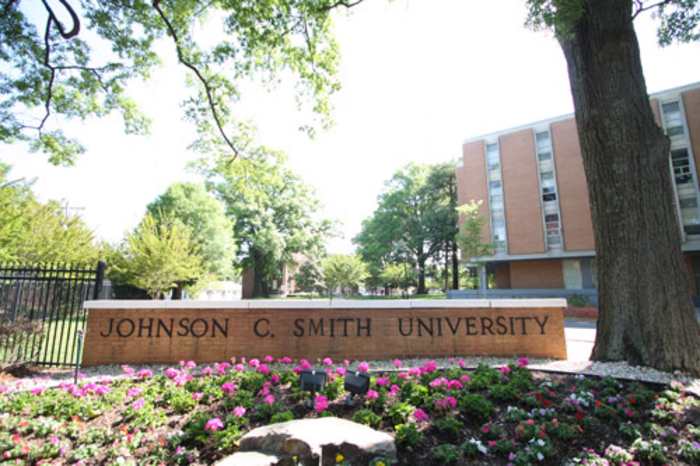
Johnson C. Smith University Campus Police Department is hosting an informational session on “What to Do when Confronted by Police” at
12:30 p.m. on Friday, April 10, 2015 in the Family Dollar Room of New Residence Hall. The campus police department places great value on maintaining positive police-community relations, and having interactions resolved without pointless conflict, injury or death to either a student or a police officer.
Across the country, there have been several tragic incidents resulting from contact between black youth and police officers. The University is doing all we can to deter these types of situations from occurring on and off campus. JCSU Campus Police does not condone police misconduct of any type. There may be times when interactions with police leave citizens with feelings of frustration or dissatisfaction. Those negative feelings are often a result of not knowing the reason(s) an officer has made certain requests or acted in a certain manner. The information presented in the class will give attendees a better understanding of police procedures and let them know what to expect from a police officer if they are stopped.
Additionally, the JCSU Campus Police is providing a list of Do’s and Don’ts for reference if you are ever stopped:
If You Are Stopped by the Police While in Your Car:
· As soon as you notice the police emergency lights, pull your vehicle over to the right and stop immediately.
· Remain in your vehicle while the officer approaches. Do not attempt to get out of your vehicle or approach the officer. Exiting your vehicle may be perceived as a threat.
· Keep your hands easily observable, preferably on the steering wheel where they can be easily seen by the approaching officer. Reaching under your seat or into your glove box are actions that will cause the officer concern that you may be reaching for a weapon.
· Give your license and proof of insurance to the officer if asked to do so. Most officers will not provide a specific reason for the stop until they have received your license and proof of insurance, to avoid debating the reason for the stop prior to acquiring this necessary information.
· If you wish to inquire as to why you were stopped or offer an explanation, do so before the officer returns to his or her vehicle.
· Answer all questions honestly. Information pertaining to prior arrests or traffic violations is easily verified via the police dispatcher.
· Do not become argumentative, disorderly, or abusive. If an officer has already written a ticket, it cannot be voided at that time. If you believe that you have been unfairly treated, DO NOT make that argument on the side of the road. Your best alternative is to carry your protest to Traffic Court.
· Whether an officer issues you a ticket or gives you a warning is entirely up to their individual discretion. Your conduct during the stop may influence the officer's decision.
· Don't be offended. Most citizens already realize that law enforcement is a difficult and dangerous profession. For these reasons, police officers tend to be extremely cautious. They may seem standoffish, impolite, or offensive to students who may not consider such precautions necessary.
If the Police Approach You on Campus or on the street:
Innocent individuals are often offended or angered, or both, because an officer detains them for questioning. Although the delay might be inconvenient, the officer believes there is a reason (reasonable suspicion) to stop you and ask questions. Most of these stops are not officer-initiated. The most common reasons that cause an officer to stop someone are as follows:
· You might be one of only a few people walking around in the vicinity of a crime that has recently occurred.
· Your clothing might be similar to that worn by the perpetrator of a crime.
· Someone may have called the police complaining about your presence or that you look "suspicious."
· Someone may have pointed you out to the officer.
· You might be acting in a manner that the officer considers "suspicious."
In All Police Encounters:
· Avoid making sudden movements (for your wallet, into your coat, toward your waistband, etc.) until you have informed the officer of your intention to do so and the officer has said it's okay.
· Do not carry weapons (real or otherwise) or even joke about having a weapon on your person.
· Remain calm and avoid being argumentative. If you are uncooperative and refuse to answer reasonable questions, the officer is likely to become more suspicious and the encounter will probably last much longer than necessary.
· Comply first, then you may seek an explanation from the officer or the officer's supervisor later.
About Johnson C. Smith University
Founded in 1867, Johnson C. Smith University is an independent, close-knit urban university located in Charlotte, N.C. It has a growing national reputation for integrating the liberal arts with business, the sciences and technology in ways that empower tomorrow’s diverse entrepreneurial citizens and leaders. Offering 23 fields of study, including a master’s degree in social work, to more than 1,400 students from a variety of ethnic, socioeconomic and geographic backgrounds, the university’s excellent academic programs focus on servant leadership, civic engagement and global responsibility. For more information about JCSU, visit www.jcsu.edu or follow the university on social media sites Facebook , Twitter, YouTube, LinkedIn and Pinterest.
 Posted By: Reginald Culpepper
Thursday, April 9th 2015 at 1:54PM
You can also
click
here to view all posts by this author...