HOW OBSSESSIVE THOUGHTS AFFECT BIPOLAR DISORDER, MENTAL HEALTH & ICE SURGE
For Immediate Release From K-LOP!
(A LEISURE WEEKEND READ)
OBSESSIVE THOUGHTS IN BIPOLAR DISORDER
Whether it�s anxiety, rumination, or intense fixations, these strategies � used by real people � can help you find relief.
Key Takeaways
Obsessive thoughts are common in bipolar disorder and can take the form of rumination, irrational fears, or overwhelming enthusiasm that disrupts daily life.
Therapy and coping strategies like cognitive behavioral techniques, grounding exercises, and structured routines can help reduce the intensity of obsessive thinking.
Recognizing obsessive thoughts as temporary mental events � not facts � can ease their grip, especially when combined with professional support and self-compassion.
Getting something stuck in your head � the catchy chorus of a song, a gruesome image from the news � can be annoying for anyone. But annoying can become alarming when intrusive thoughts, worries, or even enthusiasms turn obsessive.
For at least 20 percent of people who live with bipolar disorder, that scenario happens all too often. And when it does, the consequences can be troublesome.
What Are Obsessive Thoughts in Bipolar Disorder?
Michelle, of Florida, recalls how one obsessive bout affected her marriage. When demonstrating an app called Find My iPhone to her mother-in-law, Michelle used her husband�s cell number to show that his phone was with him at the grocery store where he works. Instead, the app pinpointed a location five miles away from where she thought her husband would be.
Already off-balance because of mood symptoms, Michelle became obsessed with the idea that her husband was having an affair � and proving it. She started checking his cell phone while he was in the shower and his computer while he was at work. If he came home tired, she took it as a sign he had spent his energy on another woman. If he were on his phone, she would want to know why.
One day, after seeing a number on his screen that she didn�t recognize, she grabbed her wallet and left the house, unsure whether she would return home. She drove around for a while before calling the suspicious number.
�It was a Walmart,� Michelle reports. �I was like, �You�ve got to be kidding me.��
That was the moment Michelle realized she needed help. She called her psychiatrist and asked to be seen right away. She had her medication adjusted and began cognitive behavioral therapy, which has helped her learn how to shift back to more realistic thinking when she�s getting obsessive.
�There�s a lot of repeating the rational thought just to get me to hear it sometimes,� says Michelle, who has a bipolar 2 diagnosis and co-existing anxiety disorders. �It�s almost as though I have a person on each shoulder � one funneling in the bad stuff and one fighting to funnel in the rational thoughts.�
Bipolar Rumination vs. Intrusive Thoughts
Intrusive thoughts, images, and impulses appear to be a nearly universal part of the human condition. The problem comes when they do more than intrude � when they won�t go away. They can keep you awake at night, disrupt your focus during the day, and steer your behavior toward counterproductive channels.
Psychiatry draws a distinction between these two experiences based on their emotional focus:
Rumination focuses on the past. This is a passive, repetitive dwelling on past personal events, negative feelings, or self-blame, usually occurring during depressive episodes.
Intrusive thoughts focus on fear. These are unwanted, distressing ideas or images that feel beyond your control and often trigger anxiety or a need for �checking� behaviors, common in mania or mixed states.
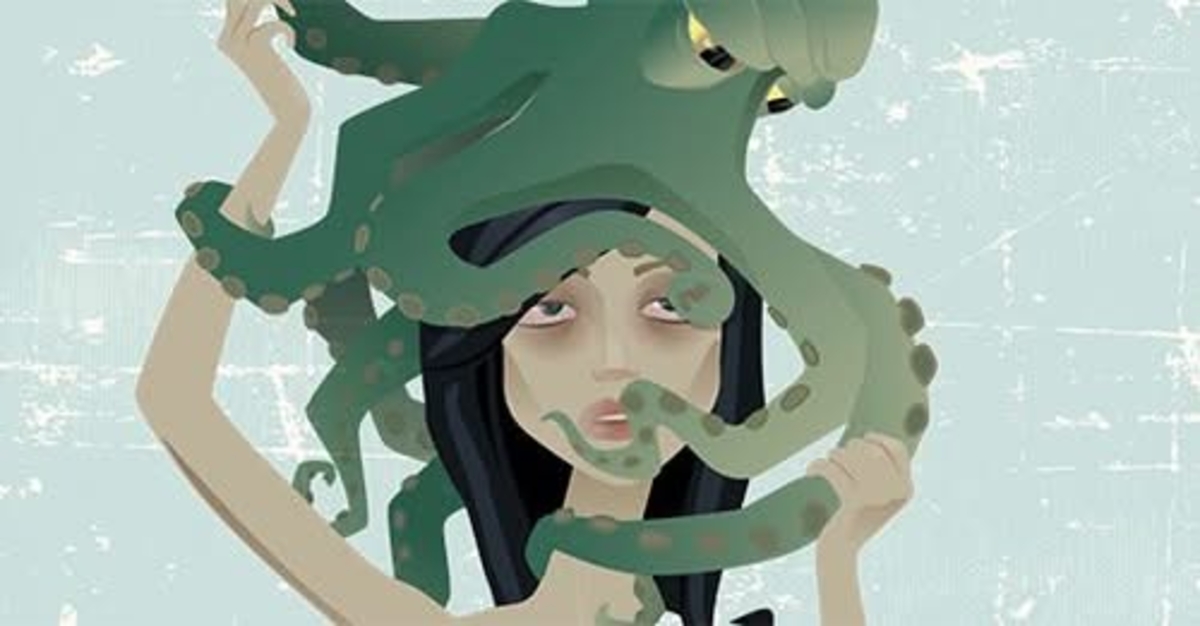
Obsessive thinking is like a hamster wheel in the brain, with different animals parading in and out over time, according to psychologist Bruce Hubbard, PhD, a visiting scholar at Columbia University Teachers College in New York City.
�People with bipolar disorder often report that there�s an obsession of the day or the week, and as one problem gets resolved, it can easily be replaced by another problem,� Dr. Hubbard says. �There�s something in the brain that needs to ruminate and worry and obsess about different topics. It could be a real problem or a completely irrational problem � it almost doesn�t matter what the topic is.�
Real life, of course, is not quite so clear-cut. For example, in one study, researchers at Harvard Medical School found that for people with bipolar disorder, rumination might signal executive dysfunction, or challenges in the brain�s ability to manage and control thoughts and actions.
How Obsessive Thinking Changes During Mania and Depression
Those medical definitions don�t always take into account the kind of obsessive thoughts and behaviors that can sweep in with mania or hypomania, when some particular enthusiasm gets taken to extremes.
For example, say you come up with an idea for a new home-based business. It feels good to have a project you�re passionate about, and you spend more and more time thinking about how to get it off the ground. Pretty soon, it�s all you�re thinking about.
You neglect current commitments because of the inordinate amount of time and money you�re spending on finding the right supplies and designing a website. You may periodically feel ashamed or guilty about being so distracted � but regardless, your mind keeps going back to your obsession.
Then the enthusiasm wanes, and you�re left with a load of debt and a life in disarray.
�It�s almost like people � grab the shovel and start digging and can�t wait to see what they find, but they wind up getting entrenched in their thoughts, and before they know it, they�re deep in a pit of nothing,� says Helen Farrell, MD, a psychiatrist in private practice in Boston. �All the stuff they were originally excited about is just not there.�
How to Manage Obsessive Thoughts
A big part of learning how to deal with this tiring parade is accepting that this is how your brain is wired, says Felisa Shizgal, a registered psychotherapist in private practice in Toronto, Ontario.
Shizgal suggests reminding yourself that obsessive thoughts �are a part of me, not all of me,� as a healthy way to recognize their presence in your life without getting overwhelmed.
Cognitive Techniques to Break Thought Patterns
Self-awareness is key. Track patterns in a log and be curious about them. What are you feeling insecure or upset about? Would it be a sensible concern to a neutral observer?
Identify triggers. Are there certain times of the day when your thoughts tend to be more intense?
Scheduled worry time. Dr. Farrell suggests identifying the obsessive thought, then scheduling a brief block of time later in the day to pay attention to it.
Behavioral Strategies and Distraction
With more self-knowledge in hand, it�s time to deploy distraction and defusion � in other words, distancing and disconnecting your mind from whatever idea is consuming you.
Physical Activity If thoughts are intense in the morning, plan a workout, or stretching before breakfast.
Engagement Relaxation exercises, yoga, watching TV, or calling a friend can help shift your focus, suggests Hubbard.
Grounding Retreat to a safe space and engage the senses with a cozy blanket, scented candles, or a healthy meal.
Body Check-In Breathing can become shallow (so take a deep breath). Shoulders can migrate toward the ears (drop them back into place). Muscles can tighten (consciously relax them).
When Obsessive Thoughts Become Severe
Mike, of Michigan, feels tension throughout his entire body when he can�t free his mind from dark thoughts, making it difficult to focus on everyday tasks long enough to complete them. He doesn�t eat well or get much sleep.
Read the full article HERE: https://www.bphope.com/obsessive-thoughts-...
********
Talk & Do: Steps to Get From Crisis Response to Community Healing (Part 2)
On May 6, Minnesota Women�s Press staff member Olivia Worcester hosted the second of our discussions with mental health specialists about how community can best respond to the latest traumas experienced in Minnesota: the targeting of Minnesotans with immigrant roots by ICE as well as the upstanders and caregivers who have supported them. Participants in the conversation included:
Alfreda Daniels, cofounder of Black Immigrant Collective, who immigrated in 2006 as a refugee from Liberia
Comfort Dondo, founder of Phumulani, which offers dignity and resources for immigrant survivors of trauma, could not attend this second discussion but shared her perspectives in written form
Hopewell Hodges, who is finishing her doctorate in clinical child psychology and has shared insights about how to talk with children about deportation and negative stereotyping
Tanya Kennedy, licensed clinical counselor with more than 20 years of experience and a private practitioner of Peace Be Still
Molly Peterson, director of adult programs at NAMI Minnesota (National Alliance on Mental Illness)
Ana Mariella Rivera, psychotherapist in private practice for 18 years and adjunct professor in social work at the University of St Catherine
The conversation opened with an acknowledgement from Ana Mariella Rivera that, in the response to ICE, we have seen a capacity for connection � how do we sustain that connection without needing a crisis to activate it?
As the discussion evolved, an underlying suggestion was to redefine healing as not simply an individual process, but one that is relational and communal. Can more members of community understand the nature of trauma so that a person�s experience and needs are validated � without requiring them to prove their stories are worthwhile, or asking them to rehash the trauma? What can we all do to make communities feel safer for people who have experienced trauma within it?
A purpose of these Talk & Do conversations with mental health specialists is to identify just that: How can communities offer ongoing forms of mutual aid, compassion, and inclusive experiences of celebration and joy?
Read the full article HERE: https://www.womenspress.com/talk-do-steps-...
********
NAMI Minnesota is part of a growing statewide effort to address the mental health impacts of gun violence
�an issue consistently raised by families, educators, young people, and communities across the state. The Minnesota Senate has passed a comprehensive gun violence prevention package that now awaits consideration in the Minnesota House of Representatives. The proposal includes measures such as a ban on semiautomatic military-style assault weapons and high-capacity magazines, expanded safe storage requirements, funding for extreme risk protection order awareness, and increased investments in school-linked mental health services, mobile crisis response, and community-based supports. It also includes additional funding for research, peer support, and mental health reimbursement rates to strengthen the broader behavioral health system.
Advocates, including parents of students killed in the Annunciation Catholic Church and School shooting, continue to press lawmakers to move the legislation forward, emphasizing both the urgency of prevention and the lasting psychological impact of gun violence on survivors and communities. Their advocacy has brought renewed attention to the intersection of trauma, grief, and policy action. NAMI Minnesota urges legislators to fully consider the mental health consequences of inaction, and to move forward with policies that address both prevention and healing.
********
Beyond The Baby Blues
Pregnancy and the postpartum period can bring real mental health challenges, and having clear, reliable
information is essential for both families and providers. Questions about antidepressants and other treatments are common, and medical experts continue to emphasize the importance of weighing the risks and benefits of care, including the impact of untreated depression on both parent and child.
Creating opportunities to learn from trusted professionals and connect with others is a key part of supporting maternal mental health. That�s why NAMI Minnesota invites you to join us for Beyond the Baby Blues, a full-day conference on Tuesday, June 2, at the American Swedish Institute. Presented with the valued support of MHS Mental Health Systems, Charlie Health, and Supernus Pharmaceuticals, this event brings together professionals, parents, and caregivers to explore education and treatment options for mood and anxiety disorders before, during, and after pregnancy.
The conference features expert-led sessions, and the $75 registration includes meals. Six CEUs approved by the Minnesota Board of Social Work are available for an additional $50, and scholarship tickets are offered to help ensure the event is accessible to all. This is an opportunity to gain practical knowledge, ask questions, and be part of a community focused on supporting the well-being of families across Minnesota.
Register: https://www.eventbrite.com/e/beyond-the-ba...
********
For Some In St. Cloud�s Somali Community, Stress From Ice Surge Strained Mental Health
The surge of U.S. Immigration and Customs Enforcement agents in St. Cloud earlier this year created a climate of intense fear and anxiety in the Somali American community that lasted for months, and left some still feeling the effects on their mental health.
The news of ICE�s presence in St. Cloud rattled a Somali American man, A.H., who has lived in the city for 12 years. MPR News agreed to use A.H.�s initials instead of his real name to protect his identity.
A.H. came to the U.S. legally and has a green card. Still, reports of federal agents forcibly detaining immigrants shocked and worried him. He stopped leaving his house to avoid encountering ICE.
�I used to go to the shops. I used to go see people out in public,� he said. �When ICE came, it ended up with me locking myself in my home, and I wouldn�t go out anywhere.�
But being stuck at home left him feeling depressed, A.H. said.
�It feels like you�re someone who�s in jail when you�re just sitting at home,� he said. �Even if someone said to you, �We�ll bring you food,� but then they say, �Just sit in your house, don�t go out that door,� it�s like you�re someone in jail.�
Read the full article HERE: https://www.mprnews.org/story/2026/05/01/f...
********
The Grand Rapids chapter of the National Alliance on Mental Illness is offering webinars on May 20, 2026.
Learn when to seek mental health support and how to find it.
GRAND RAPIDS � Where do you go when life seems overwhelming? Who do you turn to?
Should you seek help, or should you just buck up and deal with your issues?
These are some of the questions the Grand Rapids chapter of the National Alliance on Mental Illness wants to help you with. The group's president Marian Barcus and member Patty Holycross were recent Bright Spot guests on the KAXE Morning Show.
Holycross said, "I think people, ... if they're just starting on a mental health journey, are really starved for information. [They] need to know things that they don't know, and quickly."
GRAND RAPIDS � Where do you go when life seems overwhelming? Who do you turn to?
Should you seek help, or should you just buck up and deal with your issues?
These are some of the questions the Grand Rapids chapter of the National Alliance on Mental Illness wants to help you with. The group's president Marian Barcus and member Patty Holycross were recent Bright Spot guests on the KAXE Morning Show.
Learn more HERE: https://www.kaxe.org/show/91-7-kaxe-90-5-k...
********
NAMI Minnesota is part of a growing, statewide effort to address the mental health impacts of gun
violence�an issue consistently raised by families, educators, young people, and communities across the state. The Minnesota Senate has passed a comprehensive gun violence prevention package that now awaits consideration in the Minnesota House of Representatives. The proposal includes measures such as a ban on semiautomatic military-style assault weapons and high-capacity magazines, expanded safe storage requirements, funding for extreme risk protection order awareness, and increased investments in school-linked mental health services, mobile crisis response, and community-based supports. It also includes additional funding for research, peer support, and mental health reimbursement rates to strengthen the broader behavioral health system.
Advocates, including parents of students killed in the Annunciation Catholic Church and School shooting, continue to press lawmakers to move the legislation forward, emphasizing both the urgency of prevention and the lasting psychological impact of gun violence on survivors and communities. Their advocacy has brought renewed attention to the intersection of trauma, grief, and policy action. NAMI Minnesota urges legislators to fully consider the mental health consequences of inaction, and to move forward with policies that address both prevention and healing.
Read the full article HERE: https://www.kimt.com/news/nami-family-of-y...
VISIT NAMI MINNESOTA HERE: https://www.facebook.com/NAMIMinnesota
********
During Mental Health Awareness Month, remember to take care of your mental health. Asking for help is an act of bravery.
Find tips for coping with stress, including tips for Veterans and active-duty service members: https://www.ptsd.va.gov/gethelp/selfhelp_c...
Learn About Coping
Coping with Traumatic Stress Reactions
When trauma survivors take direct action to cope with their stress reactions, they put themselves in a position of power. Learn about healthy coping strategies that you can use after a trauma.
Negative Coping and PTSD
If you have the symptoms of PTSD, you may try to deal with problems in ways that cause more harm than good. This is called negative coping. Negative coping means you use quick fixes that may make a situation worse in the long run.
Coping Tips for Veterans
Tips for Veterans Coping With Large-Scale Traumatic Events
Learn ways to cope with emotions and ongoing stress that may arise after war, terrorism, mass violence or disasters occur in the U.S. or abroad.
Coping with Current Events in Ukraine
Veterans who served in conflicts and are experiencing strong emotions related to Ukraine may benefit from these tips on how to cope and manage distress.
Other Self-Help Strategies
Peer Support Groups
Locate and learn more about peer support groups to help those diagnosed with PTSD or caring for someone with PTSD.
Dogs and PTSD
Learn about the role of dogs in managing symptoms and PTSD recovery.
Tools to Help Manage Symptoms
Coping With Unwanted Thoughts: RESET for Active-duty Soldiers
RESET is a 1-hour video training that aims to help soldiers cope with intrusive (unwanted) thoughts following deployment.
PTSD Coach: Mobile App
This mobile app has self-assessments, symptom-tracking, and coping skills to help you address and monitor stress. Available for iOS and Android.
PTSD Coach Online
A series of online video coaches will guide you through 17 tools to help you manage stress. PTSD Coach Online is used on a computer, rather than a mobile device, and therefore can offer tools that involve writing.
Mindfulness Coach: Mobile App
This app includes mindfulness exercises to practice on your own or with guidance and strategies to help overcome challenges to mindfulness practice. Includes a log and reminders to support your mindfulness practice. Available for iOS.
Learn more HERE: https://www.ptsd.va.gov/gethelp/selfhelp_c...
********
NAMI Louisiana was honored to join WAFB Channel 9 News during Mental Health Awareness Month to discuss the importance of mental health awareness and our upcoming 2026 State Conference, “Together We Rise: Strengthening Communities Through Connection & Care.” 💙🌅
Mental Health Awareness Month serves as an important reminder that mental health impacts us all and that continued conversations, education, advocacy, and support are essential in building stronger communities across Louisiana. 💚💚
Our State Conference will bring together individuals, families, professionals, advocates, and community leaders for a day focused on connection, resources, and meaningful dialogue surrounding mental health and wellness.
We are grateful to WAFB for helping us amplify the message that mental health matters and for supporting efforts to reduce stigma and promote hope, healing, and community care throughout our state.
📍 Pennington Biomedical Center
📅 June 26, 2026
🎟️ Registration available on Eventbrite && Link in bio:https://www.eventbrite.com/e/nami-louisiana-state-conference-2026-tickets-1986389311904?aff=oddtdtcreator&fbclid=IwY2xjawRzHYRleHRuA2FlbQIxMABicmlkETFiUmVRQXhqdWpmd2ZwZEJ1c3J0YwZhcHBfaWQQMjIyMDM5MTc4ODIwMDg5MgABHl15c0xEmc508urpJik269gWugf0HeadIpatcQXNh3kKIKHrY76xyiwA2xZG_aem_ZosEAiv4CXIv_vnM5Oba7Q
Tardive Dyskinesia (TD) is a movement disorder that can cause uncontrollable, repetitive body movements and may impact everyday activities such as walking, eating, driving, working, or even buttoning a shirt.
For many individuals living with TD, the effects go beyond physical symptoms — it can also impact confidence, emotional well-being, and daily independence.
If you or a loved one are taking antipsychotic medication, it’s important to stay informed and speak with a healthcare provider about routine monitoring for movement-related symptoms. Early conversations and awareness matter.
This week, NAMI Louisiana stands with individuals and families affected by TD by helping reduce stigma, encourage understanding, and promote education and support. 💛
VISIT: https://www.facebook.com/namilouisiana
VISIT: ONE-STOP USA MENTAL HEALTH NEWS: https://www.flickr.com/photos/194907816@N0...
VISIT: https://www.pinterest.com/levineoliverpub/...
EDIFICATION NEVER ENDS AT: https://www.pinterest.com/levineoliverpub/...
(A LEISURE WEEKEND READ)
OBSESSIVE THOUGHTS IN BIPOLAR DISORDER
Whether it�s anxiety, rumination, or intense fixations, these strategies � used by real people � can help you find relief.
Key Takeaways
Obsessive thoughts are common in bipolar disorder and can take the form of rumination, irrational fears, or overwhelming enthusiasm that disrupts daily life.
Therapy and coping strategies like cognitive behavioral techniques, grounding exercises, and structured routines can help reduce the intensity of obsessive thinking.
Recognizing obsessive thoughts as temporary mental events � not facts � can ease their grip, especially when combined with professional support and self-compassion.
Getting something stuck in your head � the catchy chorus of a song, a gruesome image from the news � can be annoying for anyone. But annoying can become alarming when intrusive thoughts, worries, or even enthusiasms turn obsessive.
For at least 20 percent of people who live with bipolar disorder, that scenario happens all too often. And when it does, the consequences can be troublesome.
What Are Obsessive Thoughts in Bipolar Disorder?
Michelle, of Florida, recalls how one obsessive bout affected her marriage. When demonstrating an app called Find My iPhone to her mother-in-law, Michelle used her husband�s cell number to show that his phone was with him at the grocery store where he works. Instead, the app pinpointed a location five miles away from where she thought her husband would be.
Already off-balance because of mood symptoms, Michelle became obsessed with the idea that her husband was having an affair � and proving it. She started checking his cell phone while he was in the shower and his computer while he was at work. If he came home tired, she took it as a sign he had spent his energy on another woman. If he were on his phone, she would want to know why.
One day, after seeing a number on his screen that she didn�t recognize, she grabbed her wallet and left the house, unsure whether she would return home. She drove around for a while before calling the suspicious number.
�It was a Walmart,� Michelle reports. �I was like, �You�ve got to be kidding me.��
That was the moment Michelle realized she needed help. She called her psychiatrist and asked to be seen right away. She had her medication adjusted and began cognitive behavioral therapy, which has helped her learn how to shift back to more realistic thinking when she�s getting obsessive.
�There�s a lot of repeating the rational thought just to get me to hear it sometimes,� says Michelle, who has a bipolar 2 diagnosis and co-existing anxiety disorders. �It�s almost as though I have a person on each shoulder � one funneling in the bad stuff and one fighting to funnel in the rational thoughts.�
Bipolar Rumination vs. Intrusive Thoughts
Intrusive thoughts, images, and impulses appear to be a nearly universal part of the human condition. The problem comes when they do more than intrude � when they won�t go away. They can keep you awake at night, disrupt your focus during the day, and steer your behavior toward counterproductive channels.
Psychiatry draws a distinction between these two experiences based on their emotional focus:
Rumination focuses on the past. This is a passive, repetitive dwelling on past personal events, negative feelings, or self-blame, usually occurring during depressive episodes.
Intrusive thoughts focus on fear. These are unwanted, distressing ideas or images that feel beyond your control and often trigger anxiety or a need for �checking� behaviors, common in mania or mixed states.
Obsessive thinking is like a hamster wheel in the brain, with different animals parading in and out over time, according to psychologist Bruce Hubbard, PhD, a visiting scholar at Columbia University Teachers College in New York City.
�People with bipolar disorder often report that there�s an obsession of the day or the week, and as one problem gets resolved, it can easily be replaced by another problem,� Dr. Hubbard says. �There�s something in the brain that needs to ruminate and worry and obsess about different topics. It could be a real problem or a completely irrational problem � it almost doesn�t matter what the topic is.�
Real life, of course, is not quite so clear-cut. For example, in one study, researchers at Harvard Medical School found that for people with bipolar disorder, rumination might signal executive dysfunction, or challenges in the brain�s ability to manage and control thoughts and actions.
How Obsessive Thinking Changes During Mania and Depression
Those medical definitions don�t always take into account the kind of obsessive thoughts and behaviors that can sweep in with mania or hypomania, when some particular enthusiasm gets taken to extremes.
For example, say you come up with an idea for a new home-based business. It feels good to have a project you�re passionate about, and you spend more and more time thinking about how to get it off the ground. Pretty soon, it�s all you�re thinking about.
You neglect current commitments because of the inordinate amount of time and money you�re spending on finding the right supplies and designing a website. You may periodically feel ashamed or guilty about being so distracted � but regardless, your mind keeps going back to your obsession.
Then the enthusiasm wanes, and you�re left with a load of debt and a life in disarray.
�It�s almost like people � grab the shovel and start digging and can�t wait to see what they find, but they wind up getting entrenched in their thoughts, and before they know it, they�re deep in a pit of nothing,� says Helen Farrell, MD, a psychiatrist in private practice in Boston. �All the stuff they were originally excited about is just not there.�
How to Manage Obsessive Thoughts
A big part of learning how to deal with this tiring parade is accepting that this is how your brain is wired, says Felisa Shizgal, a registered psychotherapist in private practice in Toronto, Ontario.
Shizgal suggests reminding yourself that obsessive thoughts �are a part of me, not all of me,� as a healthy way to recognize their presence in your life without getting overwhelmed.
Cognitive Techniques to Break Thought Patterns
Self-awareness is key. Track patterns in a log and be curious about them. What are you feeling insecure or upset about? Would it be a sensible concern to a neutral observer?
Identify triggers. Are there certain times of the day when your thoughts tend to be more intense?
Scheduled worry time. Dr. Farrell suggests identifying the obsessive thought, then scheduling a brief block of time later in the day to pay attention to it.
Behavioral Strategies and Distraction
With more self-knowledge in hand, it�s time to deploy distraction and defusion � in other words, distancing and disconnecting your mind from whatever idea is consuming you.
Physical Activity If thoughts are intense in the morning, plan a workout, or stretching before breakfast.
Engagement Relaxation exercises, yoga, watching TV, or calling a friend can help shift your focus, suggests Hubbard.
Grounding Retreat to a safe space and engage the senses with a cozy blanket, scented candles, or a healthy meal.
Body Check-In Breathing can become shallow (so take a deep breath). Shoulders can migrate toward the ears (drop them back into place). Muscles can tighten (consciously relax them).
When Obsessive Thoughts Become Severe
Mike, of Michigan, feels tension throughout his entire body when he can�t free his mind from dark thoughts, making it difficult to focus on everyday tasks long enough to complete them. He doesn�t eat well or get much sleep.
Read the full article HERE: https://www.bphope.com/obsessive-thoughts-...
********
Talk & Do: Steps to Get From Crisis Response to Community Healing (Part 2)
On May 6, Minnesota Women�s Press staff member Olivia Worcester hosted the second of our discussions with mental health specialists about how community can best respond to the latest traumas experienced in Minnesota: the targeting of Minnesotans with immigrant roots by ICE as well as the upstanders and caregivers who have supported them. Participants in the conversation included:
Alfreda Daniels, cofounder of Black Immigrant Collective, who immigrated in 2006 as a refugee from Liberia
Comfort Dondo, founder of Phumulani, which offers dignity and resources for immigrant survivors of trauma, could not attend this second discussion but shared her perspectives in written form
Hopewell Hodges, who is finishing her doctorate in clinical child psychology and has shared insights about how to talk with children about deportation and negative stereotyping
Tanya Kennedy, licensed clinical counselor with more than 20 years of experience and a private practitioner of Peace Be Still
Molly Peterson, director of adult programs at NAMI Minnesota (National Alliance on Mental Illness)
Ana Mariella Rivera, psychotherapist in private practice for 18 years and adjunct professor in social work at the University of St Catherine
The conversation opened with an acknowledgement from Ana Mariella Rivera that, in the response to ICE, we have seen a capacity for connection � how do we sustain that connection without needing a crisis to activate it?
As the discussion evolved, an underlying suggestion was to redefine healing as not simply an individual process, but one that is relational and communal. Can more members of community understand the nature of trauma so that a person�s experience and needs are validated � without requiring them to prove their stories are worthwhile, or asking them to rehash the trauma? What can we all do to make communities feel safer for people who have experienced trauma within it?
A purpose of these Talk & Do conversations with mental health specialists is to identify just that: How can communities offer ongoing forms of mutual aid, compassion, and inclusive experiences of celebration and joy?
Read the full article HERE: https://www.womenspress.com/talk-do-steps-...
********
NAMI Minnesota is part of a growing statewide effort to address the mental health impacts of gun violence
�an issue consistently raised by families, educators, young people, and communities across the state. The Minnesota Senate has passed a comprehensive gun violence prevention package that now awaits consideration in the Minnesota House of Representatives. The proposal includes measures such as a ban on semiautomatic military-style assault weapons and high-capacity magazines, expanded safe storage requirements, funding for extreme risk protection order awareness, and increased investments in school-linked mental health services, mobile crisis response, and community-based supports. It also includes additional funding for research, peer support, and mental health reimbursement rates to strengthen the broader behavioral health system.
Advocates, including parents of students killed in the Annunciation Catholic Church and School shooting, continue to press lawmakers to move the legislation forward, emphasizing both the urgency of prevention and the lasting psychological impact of gun violence on survivors and communities. Their advocacy has brought renewed attention to the intersection of trauma, grief, and policy action. NAMI Minnesota urges legislators to fully consider the mental health consequences of inaction, and to move forward with policies that address both prevention and healing.
********
Beyond The Baby Blues
Pregnancy and the postpartum period can bring real mental health challenges, and having clear, reliable
information is essential for both families and providers. Questions about antidepressants and other treatments are common, and medical experts continue to emphasize the importance of weighing the risks and benefits of care, including the impact of untreated depression on both parent and child.
Creating opportunities to learn from trusted professionals and connect with others is a key part of supporting maternal mental health. That�s why NAMI Minnesota invites you to join us for Beyond the Baby Blues, a full-day conference on Tuesday, June 2, at the American Swedish Institute. Presented with the valued support of MHS Mental Health Systems, Charlie Health, and Supernus Pharmaceuticals, this event brings together professionals, parents, and caregivers to explore education and treatment options for mood and anxiety disorders before, during, and after pregnancy.
The conference features expert-led sessions, and the $75 registration includes meals. Six CEUs approved by the Minnesota Board of Social Work are available for an additional $50, and scholarship tickets are offered to help ensure the event is accessible to all. This is an opportunity to gain practical knowledge, ask questions, and be part of a community focused on supporting the well-being of families across Minnesota.
Register: https://www.eventbrite.com/e/beyond-the-ba...
********
For Some In St. Cloud�s Somali Community, Stress From Ice Surge Strained Mental Health
The surge of U.S. Immigration and Customs Enforcement agents in St. Cloud earlier this year created a climate of intense fear and anxiety in the Somali American community that lasted for months, and left some still feeling the effects on their mental health.
The news of ICE�s presence in St. Cloud rattled a Somali American man, A.H., who has lived in the city for 12 years. MPR News agreed to use A.H.�s initials instead of his real name to protect his identity.
A.H. came to the U.S. legally and has a green card. Still, reports of federal agents forcibly detaining immigrants shocked and worried him. He stopped leaving his house to avoid encountering ICE.
�I used to go to the shops. I used to go see people out in public,� he said. �When ICE came, it ended up with me locking myself in my home, and I wouldn�t go out anywhere.�
But being stuck at home left him feeling depressed, A.H. said.
�It feels like you�re someone who�s in jail when you�re just sitting at home,� he said. �Even if someone said to you, �We�ll bring you food,� but then they say, �Just sit in your house, don�t go out that door,� it�s like you�re someone in jail.�
Read the full article HERE: https://www.mprnews.org/story/2026/05/01/f...
********
The Grand Rapids chapter of the National Alliance on Mental Illness is offering webinars on May 20, 2026.
Learn when to seek mental health support and how to find it.
GRAND RAPIDS � Where do you go when life seems overwhelming? Who do you turn to?
Should you seek help, or should you just buck up and deal with your issues?
These are some of the questions the Grand Rapids chapter of the National Alliance on Mental Illness wants to help you with. The group's president Marian Barcus and member Patty Holycross were recent Bright Spot guests on the KAXE Morning Show.
Holycross said, "I think people, ... if they're just starting on a mental health journey, are really starved for information. [They] need to know things that they don't know, and quickly."
GRAND RAPIDS � Where do you go when life seems overwhelming? Who do you turn to?
Should you seek help, or should you just buck up and deal with your issues?
These are some of the questions the Grand Rapids chapter of the National Alliance on Mental Illness wants to help you with. The group's president Marian Barcus and member Patty Holycross were recent Bright Spot guests on the KAXE Morning Show.
Learn more HERE: https://www.kaxe.org/show/91-7-kaxe-90-5-k...
********
NAMI Minnesota is part of a growing, statewide effort to address the mental health impacts of gun
violence�an issue consistently raised by families, educators, young people, and communities across the state. The Minnesota Senate has passed a comprehensive gun violence prevention package that now awaits consideration in the Minnesota House of Representatives. The proposal includes measures such as a ban on semiautomatic military-style assault weapons and high-capacity magazines, expanded safe storage requirements, funding for extreme risk protection order awareness, and increased investments in school-linked mental health services, mobile crisis response, and community-based supports. It also includes additional funding for research, peer support, and mental health reimbursement rates to strengthen the broader behavioral health system.
Advocates, including parents of students killed in the Annunciation Catholic Church and School shooting, continue to press lawmakers to move the legislation forward, emphasizing both the urgency of prevention and the lasting psychological impact of gun violence on survivors and communities. Their advocacy has brought renewed attention to the intersection of trauma, grief, and policy action. NAMI Minnesota urges legislators to fully consider the mental health consequences of inaction, and to move forward with policies that address both prevention and healing.
Read the full article HERE: https://www.kimt.com/news/nami-family-of-y...
VISIT NAMI MINNESOTA HERE: https://www.facebook.com/NAMIMinnesota
********
During Mental Health Awareness Month, remember to take care of your mental health. Asking for help is an act of bravery.
Find tips for coping with stress, including tips for Veterans and active-duty service members: https://www.ptsd.va.gov/gethelp/selfhelp_c...
Learn About Coping
Coping with Traumatic Stress Reactions
When trauma survivors take direct action to cope with their stress reactions, they put themselves in a position of power. Learn about healthy coping strategies that you can use after a trauma.
Negative Coping and PTSD
If you have the symptoms of PTSD, you may try to deal with problems in ways that cause more harm than good. This is called negative coping. Negative coping means you use quick fixes that may make a situation worse in the long run.
Coping Tips for Veterans
Tips for Veterans Coping With Large-Scale Traumatic Events
Learn ways to cope with emotions and ongoing stress that may arise after war, terrorism, mass violence or disasters occur in the U.S. or abroad.
Coping with Current Events in Ukraine
Veterans who served in conflicts and are experiencing strong emotions related to Ukraine may benefit from these tips on how to cope and manage distress.
Other Self-Help Strategies
Peer Support Groups
Locate and learn more about peer support groups to help those diagnosed with PTSD or caring for someone with PTSD.
Dogs and PTSD
Learn about the role of dogs in managing symptoms and PTSD recovery.
Tools to Help Manage Symptoms
Coping With Unwanted Thoughts: RESET for Active-duty Soldiers
RESET is a 1-hour video training that aims to help soldiers cope with intrusive (unwanted) thoughts following deployment.
PTSD Coach: Mobile App
This mobile app has self-assessments, symptom-tracking, and coping skills to help you address and monitor stress. Available for iOS and Android.
PTSD Coach Online
A series of online video coaches will guide you through 17 tools to help you manage stress. PTSD Coach Online is used on a computer, rather than a mobile device, and therefore can offer tools that involve writing.
Mindfulness Coach: Mobile App
This app includes mindfulness exercises to practice on your own or with guidance and strategies to help overcome challenges to mindfulness practice. Includes a log and reminders to support your mindfulness practice. Available for iOS.
Learn more HERE: https://www.ptsd.va.gov/gethelp/selfhelp_c...
********
NAMI Louisiana was honored to join WAFB Channel 9 News during Mental Health Awareness Month to discuss the importance of mental health awareness and our upcoming 2026 State Conference, “Together We Rise: Strengthening Communities Through Connection & Care.” 💙🌅
Mental Health Awareness Month serves as an important reminder that mental health impacts us all and that continued conversations, education, advocacy, and support are essential in building stronger communities across Louisiana. 💚💚
Our State Conference will bring together individuals, families, professionals, advocates, and community leaders for a day focused on connection, resources, and meaningful dialogue surrounding mental health and wellness.
We are grateful to WAFB for helping us amplify the message that mental health matters and for supporting efforts to reduce stigma and promote hope, healing, and community care throughout our state.
📍 Pennington Biomedical Center
📅 June 26, 2026
🎟️ Registration available on Eventbrite && Link in bio:https://www.eventbrite.com/e/nami-louisiana-state-conference-2026-tickets-1986389311904?aff=oddtdtcreator&fbclid=IwY2xjawRzHYRleHRuA2FlbQIxMABicmlkETFiUmVRQXhqdWpmd2ZwZEJ1c3J0YwZhcHBfaWQQMjIyMDM5MTc4ODIwMDg5MgABHl15c0xEmc508urpJik269gWugf0HeadIpatcQXNh3kKIKHrY76xyiwA2xZG_aem_ZosEAiv4CXIv_vnM5Oba7Q
Tardive Dyskinesia (TD) is a movement disorder that can cause uncontrollable, repetitive body movements and may impact everyday activities such as walking, eating, driving, working, or even buttoning a shirt.
For many individuals living with TD, the effects go beyond physical symptoms — it can also impact confidence, emotional well-being, and daily independence.
If you or a loved one are taking antipsychotic medication, it’s important to stay informed and speak with a healthcare provider about routine monitoring for movement-related symptoms. Early conversations and awareness matter.
This week, NAMI Louisiana stands with individuals and families affected by TD by helping reduce stigma, encourage understanding, and promote education and support. 💛
VISIT: https://www.facebook.com/namilouisiana
VISIT: ONE-STOP USA MENTAL HEALTH NEWS: https://www.flickr.com/photos/194907816@N0...
VISIT: https://www.pinterest.com/levineoliverpub/...
EDIFICATION NEVER ENDS AT: https://www.pinterest.com/levineoliverpub/...