A Historic Church Honors HBCUs
A Historic Church Honors HBCUs
Photo Credit: Derrell Smith/the Hilltop
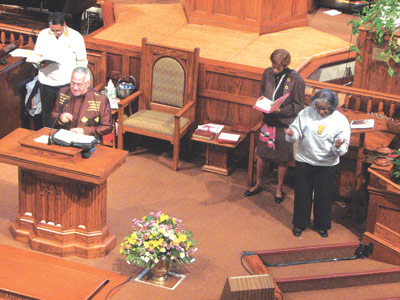
For five years, Shiloh Baptist Church has chosen a Sunday in February to honor, promote and celebrate historically black colleges.
By Traver Riggins
Black College Wire
With snowflakes the size of cotton balls falling around the nation's capital, Washington's historic Shiloh Baptist Church lifted nearly 1,200 spirits in its annual HBCU Sunday.
“It’s cold outside, but it’s warm inside,” said Rochelle Hardy, a Howard University alumna and family physician.
For five years, Shiloh has chosen one Sunday in February to honor, promote and celebrate historically black colleges and universities.
“We want to bring awareness of how important HBCUs are to education,” said Otis Harris, president of Shiloh’s HBCU council and Virginia State University alumnus, “especially with many being founded through various denominations of churches.”
The history of Shiloh predates that of HBCUs. It originated in Fredericksburg, Va., during slavery. Union troops entered Fredericksburg during the Civil War and used it as a hospital.
Today it has 4,000 members and is one of the District of Columbia's most well-known congregations. During February, Black History Month, Lorraine C. Miller was sworn in as clerk of the House of Representatives, the first African American to hold the seat since it was created in 1789. Miller sings first alto in Shiloh's choir.
At the Feb. 25 HBCU celebration, members of the congregation flaunted the emblems and colors of their alma maters and Greek organizations as church officials teased about Greek and collegiate rivalries.
Anita Jordan, a University of the District of Columbia graduate, sported her blue and white Zeta Phi Beta sorority jacket because, she said, it shows young people where they can go and how they contribute to society by working with others.
I'm glad that Shiloh is taking an initiative to set aside one Sunday a year," said Vernon Jackson, a member of Shiloh. "It lets young black kids know what they should do."
Each year, the HBCU council awards two scholarships to local HBCU-bound high school seniors who exemplify strength in academics, character and service. Laila Yette of Hubert Blake High School in the Washington suburb of Silver Spring, Md., and Fran Hall of Banneker High School in Washington were awarded the Dr. Wallace Charles Smith Award and the HBCU Council Heritage Awards, respectively. The students receive their $2,000 prizes at the beginning of their freshman year.
“I know what it’s like to have somebody’s support for your academic endeavors,” Hardy, the HBCU scholarship chair, said. It is important that the church and HBCUs give back to the youth so that they may continue the HBCU legacy, she said.
Yette said she plans to use her scholarship and HBCU education to better the world and set examples for people around her.
“We’re united into helping better ourselves as a whole,” she said.
In addition to the two original scholarships, the council this year awarded a third in the name of Earl Hayes, former deputy director and senior program manager for the White House Initiative on HBCUs. Through his work with the science and technology cluster, he was able to pull 12 federal agencies together to set 36 percent of research monies aside for HBCUs between 2001 and 2003, Dr. Hardy said. Hayes died Aug. 29 at age 75.
Chidiebere Ukaegbu of Washington's Banneker High received the $1,000 award that Hardy said she hopes to be able to establish as a yearly honor.
This year's guest speaker was Jeremiah Wright Jr., a Howard alumnus and pastor of Trinity United Church of Christ in Chicago for nearly 35 years.
Wright, a man of countless honors, titles and degrees, used Genesis 39: 1-10 to speak about slavery and preserving who and what one is despite physical location or circumstances.
The congregation laughed and learned as Wright discussed Greek life and mother-son quarrels.
“Where our grandparents were in bondage, they were never in slavery,” Wright said. But in recent times, he said, “they have flipped the script.” Today’s black people allow themselves to be controlled mentally and psychologically, and therefore enslaved, he said at several points without elaboration.
“One thing we must teach our children is that consistency and integrity are far more important than popularity,” he said.
Like other guest speakers, Wright related the Bible and Christianity to the importance of HBCUs.
“It’s so interesting how they have interjected how important education in biblical times was and how it is important today at HBCUs,” Harris said.said.
Wright said the historically black schools offer students a unique experience.
“Teachers see you as an individual not just a number or a means to a paycheck,” he said.d.
Lezli Baskervile, president of the Howard University School of Law Alum and CEO of the National Association for Equal Opportunity in Higher Education, was honored by the HBCU council for her contributions to the black and HBCU communities. But her story gave more to the congregation than she received.
While in law school, Baskerville fell ill, was hospitalized and awakened from a six-week coma blind and paralyzed below the waist.
“I woke up and I was shaken and my faith was shaken,” she said. Hopeless and broken, she gave up her dream to become a lawyer, but her professors at the School of Law could not. They made it their daily duty to ensure that she completed her degree.
“I’ll never forget the names of those professors who came to my bedside and taught me my lessons for six months,” Baskerville said.
Hers was one story that inspired students to attend HBCUs. The Norfolk State University Concert Choir and the Howard University Andrew Rankin Dance Ministry set the tone. Together, they showed Yette and Hall the possibilities that HBCUs offer.
“This deconstructs the myth that they are inferior schools,” Wright said.
Traver Riggins, a Howard University student, writes for the Hilltop. To comment, e-mail bcwire@hotmail.com
Photo Credit: Derrell Smith/the Hilltop
For five years, Shiloh Baptist Church has chosen a Sunday in February to honor, promote and celebrate historically black colleges.
By Traver Riggins
Black College Wire
With snowflakes the size of cotton balls falling around the nation's capital, Washington's historic Shiloh Baptist Church lifted nearly 1,200 spirits in its annual HBCU Sunday.
“It’s cold outside, but it’s warm inside,” said Rochelle Hardy, a Howard University alumna and family physician.
For five years, Shiloh has chosen one Sunday in February to honor, promote and celebrate historically black colleges and universities.
“We want to bring awareness of how important HBCUs are to education,” said Otis Harris, president of Shiloh’s HBCU council and Virginia State University alumnus, “especially with many being founded through various denominations of churches.”
The history of Shiloh predates that of HBCUs. It originated in Fredericksburg, Va., during slavery. Union troops entered Fredericksburg during the Civil War and used it as a hospital.
Today it has 4,000 members and is one of the District of Columbia's most well-known congregations. During February, Black History Month, Lorraine C. Miller was sworn in as clerk of the House of Representatives, the first African American to hold the seat since it was created in 1789. Miller sings first alto in Shiloh's choir.
At the Feb. 25 HBCU celebration, members of the congregation flaunted the emblems and colors of their alma maters and Greek organizations as church officials teased about Greek and collegiate rivalries.
Anita Jordan, a University of the District of Columbia graduate, sported her blue and white Zeta Phi Beta sorority jacket because, she said, it shows young people where they can go and how they contribute to society by working with others.
I'm glad that Shiloh is taking an initiative to set aside one Sunday a year," said Vernon Jackson, a member of Shiloh. "It lets young black kids know what they should do."
Each year, the HBCU council awards two scholarships to local HBCU-bound high school seniors who exemplify strength in academics, character and service. Laila Yette of Hubert Blake High School in the Washington suburb of Silver Spring, Md., and Fran Hall of Banneker High School in Washington were awarded the Dr. Wallace Charles Smith Award and the HBCU Council Heritage Awards, respectively. The students receive their $2,000 prizes at the beginning of their freshman year.
“I know what it’s like to have somebody’s support for your academic endeavors,” Hardy, the HBCU scholarship chair, said. It is important that the church and HBCUs give back to the youth so that they may continue the HBCU legacy, she said.
Yette said she plans to use her scholarship and HBCU education to better the world and set examples for people around her.
“We’re united into helping better ourselves as a whole,” she said.
In addition to the two original scholarships, the council this year awarded a third in the name of Earl Hayes, former deputy director and senior program manager for the White House Initiative on HBCUs. Through his work with the science and technology cluster, he was able to pull 12 federal agencies together to set 36 percent of research monies aside for HBCUs between 2001 and 2003, Dr. Hardy said. Hayes died Aug. 29 at age 75.
Chidiebere Ukaegbu of Washington's Banneker High received the $1,000 award that Hardy said she hopes to be able to establish as a yearly honor.
This year's guest speaker was Jeremiah Wright Jr., a Howard alumnus and pastor of Trinity United Church of Christ in Chicago for nearly 35 years.
Wright, a man of countless honors, titles and degrees, used Genesis 39: 1-10 to speak about slavery and preserving who and what one is despite physical location or circumstances.
The congregation laughed and learned as Wright discussed Greek life and mother-son quarrels.
“Where our grandparents were in bondage, they were never in slavery,” Wright said. But in recent times, he said, “they have flipped the script.” Today’s black people allow themselves to be controlled mentally and psychologically, and therefore enslaved, he said at several points without elaboration.
“One thing we must teach our children is that consistency and integrity are far more important than popularity,” he said.
Like other guest speakers, Wright related the Bible and Christianity to the importance of HBCUs.
“It’s so interesting how they have interjected how important education in biblical times was and how it is important today at HBCUs,” Harris said.said.
Wright said the historically black schools offer students a unique experience.
“Teachers see you as an individual not just a number or a means to a paycheck,” he said.d.
Lezli Baskervile, president of the Howard University School of Law Alum and CEO of the National Association for Equal Opportunity in Higher Education, was honored by the HBCU council for her contributions to the black and HBCU communities. But her story gave more to the congregation than she received.
While in law school, Baskerville fell ill, was hospitalized and awakened from a six-week coma blind and paralyzed below the waist.
“I woke up and I was shaken and my faith was shaken,” she said. Hopeless and broken, she gave up her dream to become a lawyer, but her professors at the School of Law could not. They made it their daily duty to ensure that she completed her degree.
“I’ll never forget the names of those professors who came to my bedside and taught me my lessons for six months,” Baskerville said.
Hers was one story that inspired students to attend HBCUs. The Norfolk State University Concert Choir and the Howard University Andrew Rankin Dance Ministry set the tone. Together, they showed Yette and Hall the possibilities that HBCUs offer.
“This deconstructs the myth that they are inferior schools,” Wright said.
Traver Riggins, a Howard University student, writes for the Hilltop. To comment, e-mail bcwire@hotmail.com