
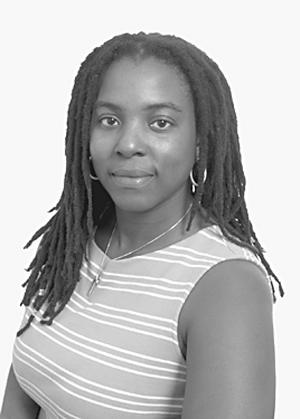
Hampton Alum Mariel Blake Tells It Like It `Tis
HBCUs: Talk about the 'hookup'! (Part 4)
Mariel Blake
Friday, February 24th 2006
Historically Black Colleges and Universities - HBCUs - served as the bridge from the time of our forced "miseducation" to our new status and opportunity. We knew a great deal about history, science, literature, mathematics, commerce and other subjects that make up a traditional school curriculum but lacked the ability to record and demonstrate this knowledge in a way that was accepted in the society in which we found ourselves.
HBCUs gave us the ways and means of how to navigate this new world. However, if that were their only reason for being, then the need for HBCUs would have dissipated long ago. HBCUs remain relevant because of their effectiveness and their character. When you are a student at an HBCU you have the feeling of being a part of something so much bigger than yourself. You are keenly aware of the fact that your educational experience is ongoing, inside and outside of the classroom.
A large number of HBCU students are legacies, meaning someone in their family, often many family members over many generations, went to a HBCU, usually the very one they themselves are attending. The sense of tradition and connection is irresistible.
Many people think African-American students choose to go to HBCUs for the familiarity or to get the "black experience." An instructor pointed out to me and my classmates, after many of us expressed this as our reason for attending Hampton University, that coming to an HBCU to get this so-called "black experience" was a fallacy.
Even though most of us came from schools where we were definitely in the minority, sometimes the only "chip in the cookie," that did not make us any other race than what we were. Our physical environment, economic status, values, family makeup, social circle and many other factors meant that we all lived very different examples of black life, and it was foolish to think there was one "black experience."
Truly, the fact that attending a HBCU as an African-American means you will be surrounded by the "familiar" is misleading. Contrary to stereotypical beliefs that linger in this country, all African-Americans are not alike. It is no more a benefit for African-Americans attending a HBCU than it is for a white student to attend a predominantly white institution. What you find when you examine the student body of a HBCU is its diversity across all demographics. Attending a HBCU prepares you to face life in the "real world" because you learn not to judge people based on their outer appearance. You meet people from all walks of life who represent the spectrum of our society.
Your classmates are often students who are sought after by many of the best schools in the country not just to fulfill diversity quotients but because they are at the tops of their graduating classes. You get to meet people who are your cultural opposites. It is a true mix that forces you to accept differences in people and learn more about yourself.
Being a HBCU student and alum connects you to a powerful group of people who love to network and support their fellow HBCU graduates. Watch your head while I name drop here. Barbara Jordan, Kwame Kilpatrick, Ruben Studdard, Alex Haley, Common, Nikki Giovanni, Erykah Badu, Andrew Young, David Dinkins, Ossie Davis, Toni Morrison, Bessie Coleman, Langston Hughes, Jerry Rice, Oprah Winfrey, Keenan Ivory Wayans, Reginald Lewis, Alcee Hastings, John Lewis and many other people throughout the world whose names may never be famous are providing an excellent example of success and making positive, proactive contributions not despite having attended a HBCU but because of it.
I grew up wanting to go to South Carolina State College like my parents, but at the time I couldn't pursue my major there. My preacher's daughter introduced me to Hampton. The beauty of its campus, right on the water with wide-open spaces and magnificent, historical buildings, and the strength of its curriculum and facilities caught me. I learned about how much fun it was and how close knit the students were and of all the opportunities to expand my personal horizons I could experience and I was sold. Attending Hampton University was a decision I have never regretted in any way.
Hampton gave me something I hear echoed by my many friends who also attended HBCUs. I got the freedom to be myself, through all my many manifestations, and to explore not only what it means to be African-American but what it means to be me.
I learned that Athens, Ga., was just one little corner of the world and that there is a vast array of people and places out there. It gave me the courage to grow up. I felt safe to fully educate myself, to challenge and be challenged not just because I was surrounded by classmates and instructors who looked like me but because it is the history and mission of the HBCU to nurture its students for their individuality and to help them find their strengths.
To paraphrase Hampton's alma mater, HBCU alum treasure the days we spent in life's preparation that enabled us to go with brave hearts upon our chosen ways. Attending a HBCU is not a novelty, no matter what your racial designation. HBCUs are varied enough to offer a match for any student because they care about the totality of your college experience.
Mariel Blake, a Daily News contributing columnist, is a HBCU graduate. This is part four of a four-part series on Historically Black Colleges and Universities.
Mariel Blake
Friday, February 24th 2006
Historically Black Colleges and Universities - HBCUs - served as the bridge from the time of our forced "miseducation" to our new status and opportunity. We knew a great deal about history, science, literature, mathematics, commerce and other subjects that make up a traditional school curriculum but lacked the ability to record and demonstrate this knowledge in a way that was accepted in the society in which we found ourselves.
HBCUs gave us the ways and means of how to navigate this new world. However, if that were their only reason for being, then the need for HBCUs would have dissipated long ago. HBCUs remain relevant because of their effectiveness and their character. When you are a student at an HBCU you have the feeling of being a part of something so much bigger than yourself. You are keenly aware of the fact that your educational experience is ongoing, inside and outside of the classroom.
A large number of HBCU students are legacies, meaning someone in their family, often many family members over many generations, went to a HBCU, usually the very one they themselves are attending. The sense of tradition and connection is irresistible.
Many people think African-American students choose to go to HBCUs for the familiarity or to get the "black experience." An instructor pointed out to me and my classmates, after many of us expressed this as our reason for attending Hampton University, that coming to an HBCU to get this so-called "black experience" was a fallacy.
Even though most of us came from schools where we were definitely in the minority, sometimes the only "chip in the cookie," that did not make us any other race than what we were. Our physical environment, economic status, values, family makeup, social circle and many other factors meant that we all lived very different examples of black life, and it was foolish to think there was one "black experience."
Truly, the fact that attending a HBCU as an African-American means you will be surrounded by the "familiar" is misleading. Contrary to stereotypical beliefs that linger in this country, all African-Americans are not alike. It is no more a benefit for African-Americans attending a HBCU than it is for a white student to attend a predominantly white institution. What you find when you examine the student body of a HBCU is its diversity across all demographics. Attending a HBCU prepares you to face life in the "real world" because you learn not to judge people based on their outer appearance. You meet people from all walks of life who represent the spectrum of our society.
Your classmates are often students who are sought after by many of the best schools in the country not just to fulfill diversity quotients but because they are at the tops of their graduating classes. You get to meet people who are your cultural opposites. It is a true mix that forces you to accept differences in people and learn more about yourself.
Being a HBCU student and alum connects you to a powerful group of people who love to network and support their fellow HBCU graduates. Watch your head while I name drop here. Barbara Jordan, Kwame Kilpatrick, Ruben Studdard, Alex Haley, Common, Nikki Giovanni, Erykah Badu, Andrew Young, David Dinkins, Ossie Davis, Toni Morrison, Bessie Coleman, Langston Hughes, Jerry Rice, Oprah Winfrey, Keenan Ivory Wayans, Reginald Lewis, Alcee Hastings, John Lewis and many other people throughout the world whose names may never be famous are providing an excellent example of success and making positive, proactive contributions not despite having attended a HBCU but because of it.
I grew up wanting to go to South Carolina State College like my parents, but at the time I couldn't pursue my major there. My preacher's daughter introduced me to Hampton. The beauty of its campus, right on the water with wide-open spaces and magnificent, historical buildings, and the strength of its curriculum and facilities caught me. I learned about how much fun it was and how close knit the students were and of all the opportunities to expand my personal horizons I could experience and I was sold. Attending Hampton University was a decision I have never regretted in any way.
Hampton gave me something I hear echoed by my many friends who also attended HBCUs. I got the freedom to be myself, through all my many manifestations, and to explore not only what it means to be African-American but what it means to be me.
I learned that Athens, Ga., was just one little corner of the world and that there is a vast array of people and places out there. It gave me the courage to grow up. I felt safe to fully educate myself, to challenge and be challenged not just because I was surrounded by classmates and instructors who looked like me but because it is the history and mission of the HBCU to nurture its students for their individuality and to help them find their strengths.
To paraphrase Hampton's alma mater, HBCU alum treasure the days we spent in life's preparation that enabled us to go with brave hearts upon our chosen ways. Attending a HBCU is not a novelty, no matter what your racial designation. HBCUs are varied enough to offer a match for any student because they care about the totality of your college experience.
Mariel Blake, a Daily News contributing columnist, is a HBCU graduate. This is part four of a four-part series on Historically Black Colleges and Universities.